


Mogadishu, 9 September 2025 - Somalia has been rebuilding after decades of war and civil strife, and the international community’s support – including that of the United Nations – for its efforts are wide-ranging, covering areas from humanitarian aid to economic development.
Another of those areas is the strengthening of the country’s national security institutions and developing the skills of Somali security forces.
At the UN Transitional Assistance Mission in Somalia (UNTMIS), some of the experts responsible for support in this area are located in the Defence Sector Reform (DSR) Section, which provides security sector coordination and military advisory support.
Part of UNTMIS’ Rule of Law and Security Institutions Group, the DSR Section provides guidance on defence reform to Somali national institutions through established coordination mechanisms, liaises with international security partners, supports the implementation of the Somali Security Development plan, and advises on how military developments affect the political landscape, and vice versa.
The section collaborates closely with the Somali National Army (SNA), African Union forces (AUSSOM), and Federal and State-level stakeholders to ensure coherent, sustainable and Somali-led security outcomes; and is staffed by a team of military experts hailing from Ghana, India, Senegal, Sierra Leone, Turkey, Uganda and UK.
They are led by UNTMIS’ Senior Military Advisor, General Mohamadou Abdoulaye Sylla, an infantry officer in the Forces armées du Sénégal (transl.: Armed Forces of Senegal) with more than 30 years of experience in his country’s military, as well as prior service with UN peace operations in Rwanda, the Democratic Republic of the Congo and Sudan.
Gen. Sylla recently visited Baidoa, the largest city in Somalia’s South West State.
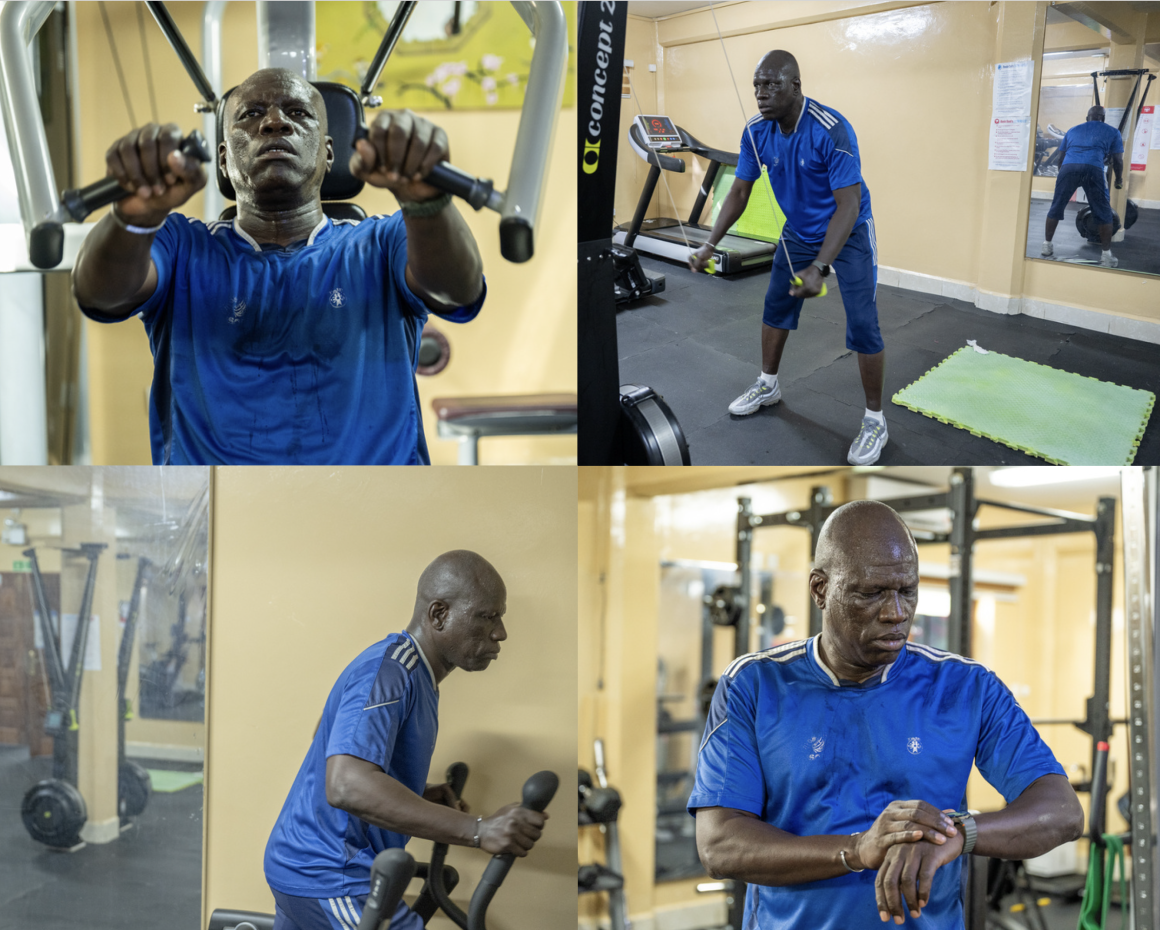
05:30 a.m. – A disciplined start
As the sun rises, so does Gen. Sylla! With 32 years of military life under his belt and a firm believer in the lifelong benefits of exercise, he rises early to begin his daily workout – no noise, no crowds.
“For me, there is no better way to start the day: some effort, some sweat, get the heart pumping and then I am ready to face whatever the day has in store for me!” Gen. Sylla says in-between sets of weights.
“Sports is the only thing a soldier does for himself while serving in the military. Indeed, everything you do is for others in the sense of serving, but as you build your body fit for your mission of service, you get health and vitality for your own benefit,” he adds.
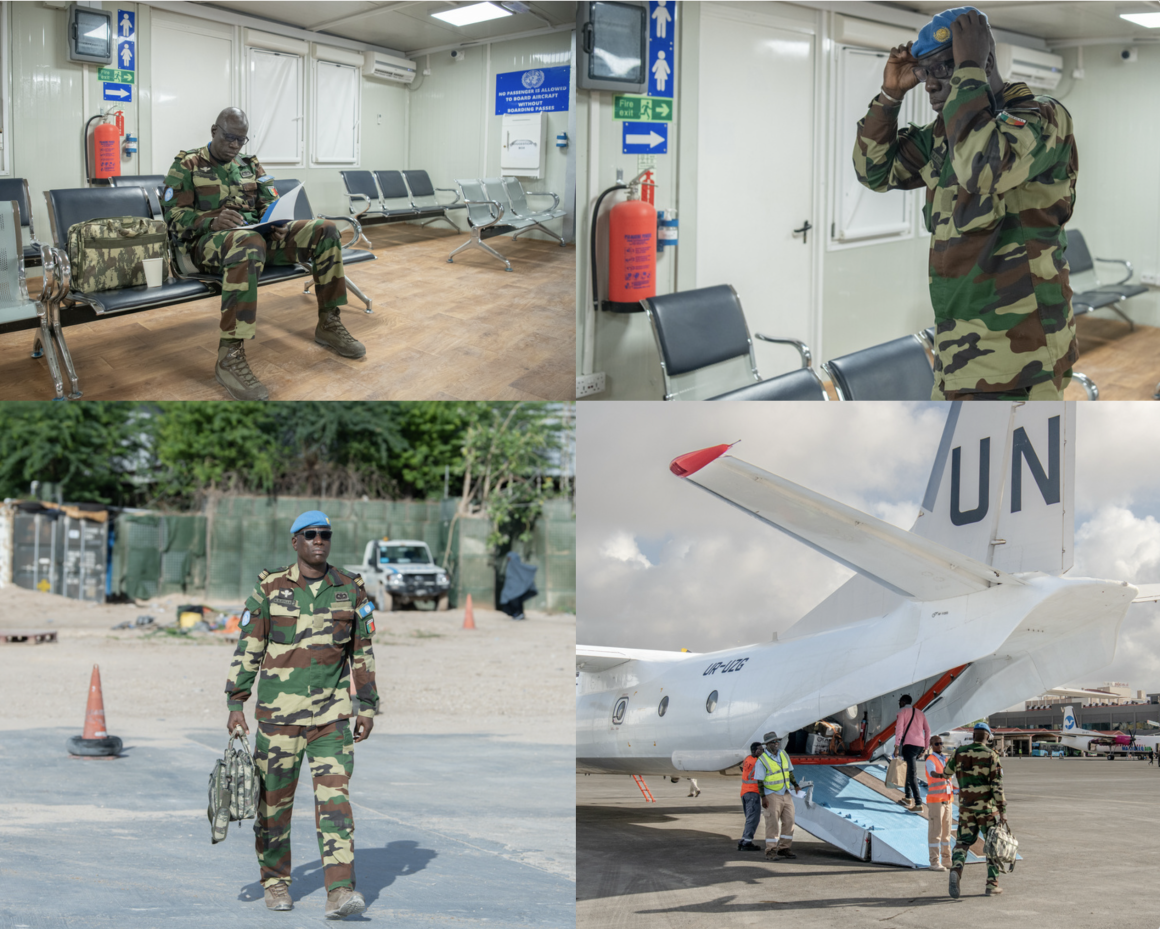
07:30 a.m. – In the lounge and on the tarmac
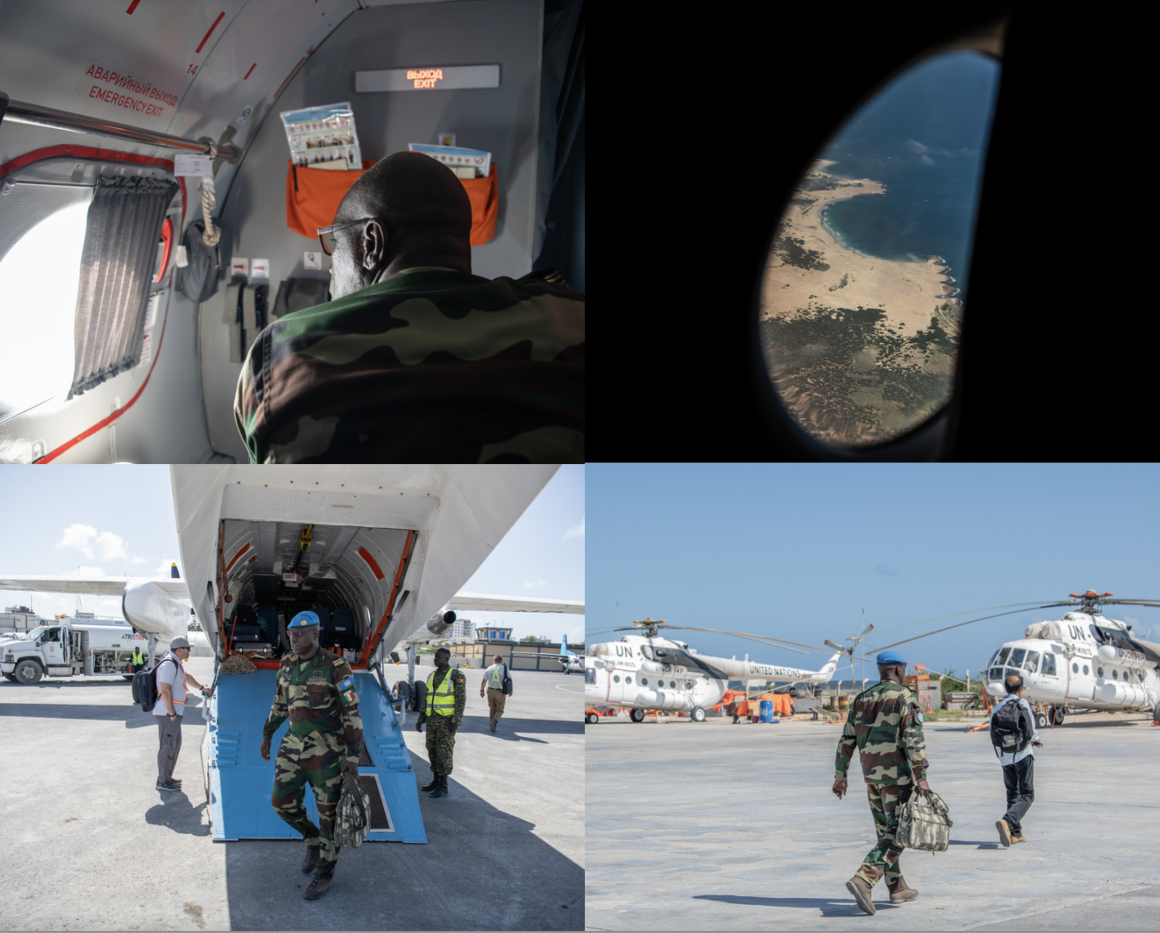
With his exercise and breakfast squared away, Gen. Sylla is soon at the UN’s departure facilities at the Aden Adde International Airport, ready to catch a regular UN flight to Baidoa. Today’s transport is the Antonov An-26, a workhorse of the UN’s small fleet of aircraft used to move between Mogadishu and various parts of the country.
“You don’t join the army for comfort – and it’s the same for the United Nations! As long as it gets you safely and on time from A to B,” Gen. Sylla says while waiting for his flight’s boarding to be announced.
08:30 a.m. – In the air
The flight from Mogadishu to Baidoa lasts only one hour– but it’s time well-spent for Gen. Sylla. He reviews his notes for his planned meetings throughout the day.
Broadly, as the UN’s Senior Military Advisor, he is expected to provide real-time advice based on the latest political and security developments. The thrust of today’s trip is to assess security at the UN compound in light of any external threats.
“Getting out to meet with interlocutors from the Somali government and security forces, as well as those from international partners like the forces serving with the African Union peacekeepers here is important. E-mails and video calls can help, but getting out to meet and confer with interlocutors face-to-face is an essential part of confidence- and trust-building and getting a real appreciation of the challenges being faced and how we can help is a vital part of my work here,” Gen. Sylla says soon after landing.
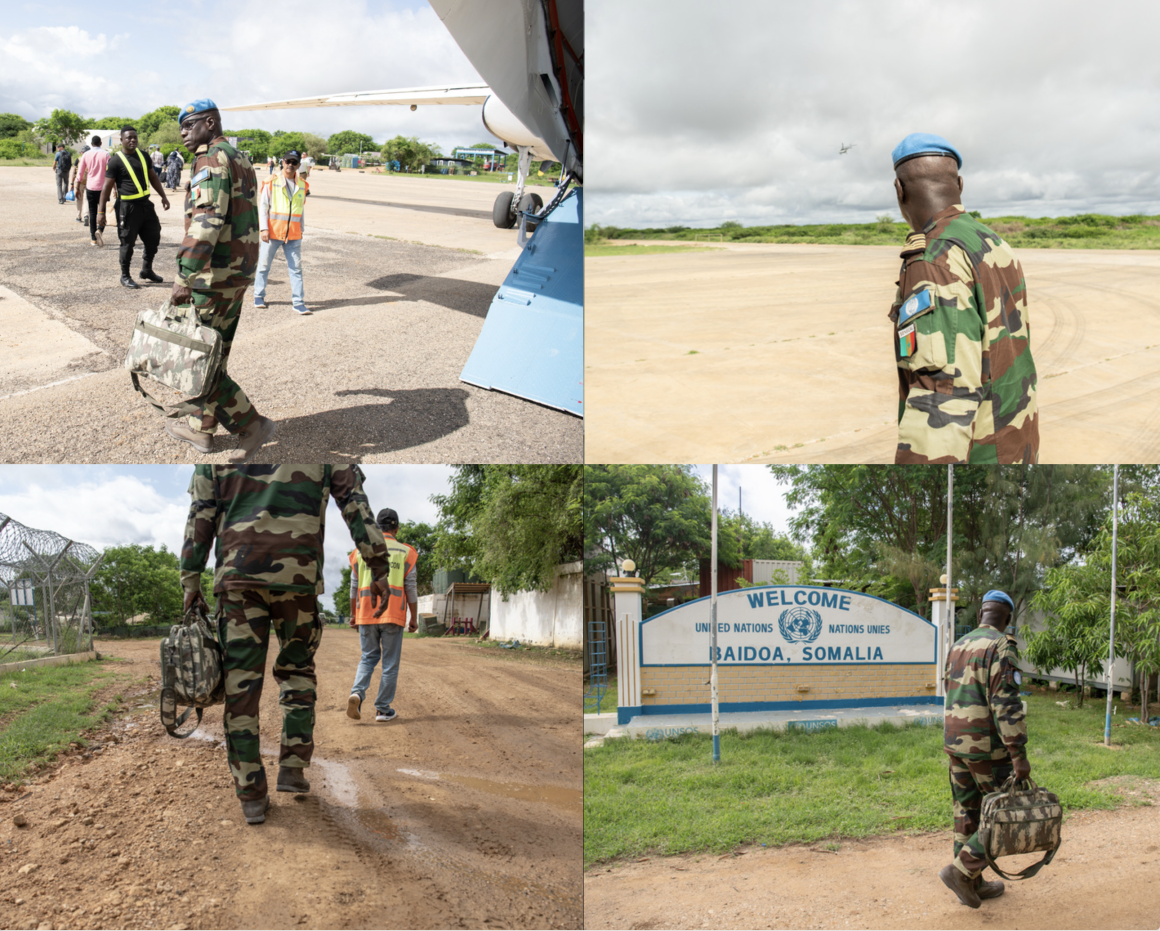
09:00 a.m. – Landing in Baidoa
Home to 1.7 million people, including a substantial number of people displaced by Somalia’s ongoing conflict with the Al-Shabaab terrorist group and worsening climate impacts, Baidoa is the largest city of Somalia’s South West State, and serves as its interim capital.
Officials and experts from the UN system – including many humanitarian agencies such as the Office of the UN High Commissioner for Refugees and the International Organization for Migration – operate out of a shared compound next to Baidoa’s Shaati-Gaduud International Airport. The compound and a nearby administrative centre are protected by Ethiopian National Defense Forces under the umbrella of AUSSOM.
South West State is a relatively green and lush part of the country. The sky is cloudy and a cool breeze greets Gen. Sylla as he deboards and makes his way from the airport to the UN Compound.
“It’s been raining a lot lately, which is good for the terrible drought situation, but it also makes the area greener and that always reminds me of home during the rainy season,” Gen. Sylla says, thinking of his home country, Senegal, almost 7,000 kilometres away on the other side of the continent.
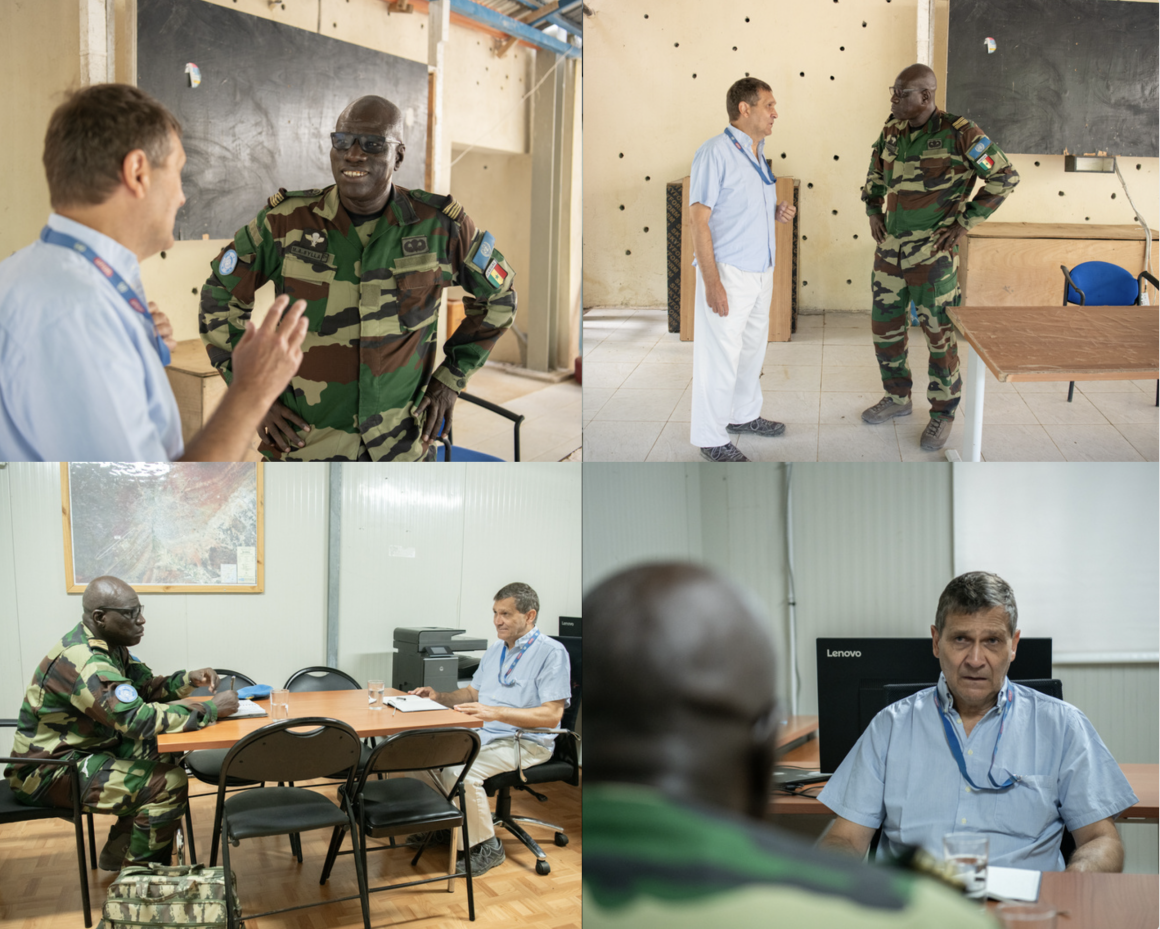
09:15 a.m. – First meeting: the Head of Office
On these trips around Somalia, Gen. Sylla is subject to limited and sometimes changing flight schedules. He tries to have his schedule full to make the most of every minute on the ground in each location.
He prefers to start such visits with a discussion with the UNTMIS Head of Office – in this case, it’s Magnus Bjarnason, who heads the Baidoa office, an Icelandic national with ten years of service with the United Nations in Somalia, most of it spent heading UN field offices across the country.
“The heads of offices for UNTMIS around Somalia are responsible for political and state building support to the Federal Member State governments, based in the respective state capitals. We are always keen to ensure that local issues on the ground are clearly understood by colleagues working on the big picture national issues,” Mr. Bjarnason says after their meeting.
Gen. Sylla concurs: “It’s important for me to have a situational overview and detailed updates on the political and security dynamics in the area, and that’s exactly what Magnus gave me today. I can’t stress enough how important it is to have eyes and ears on the ground to get this information first-hand.”
10:00 a.m. – Second meeting: Sector 3 Commander
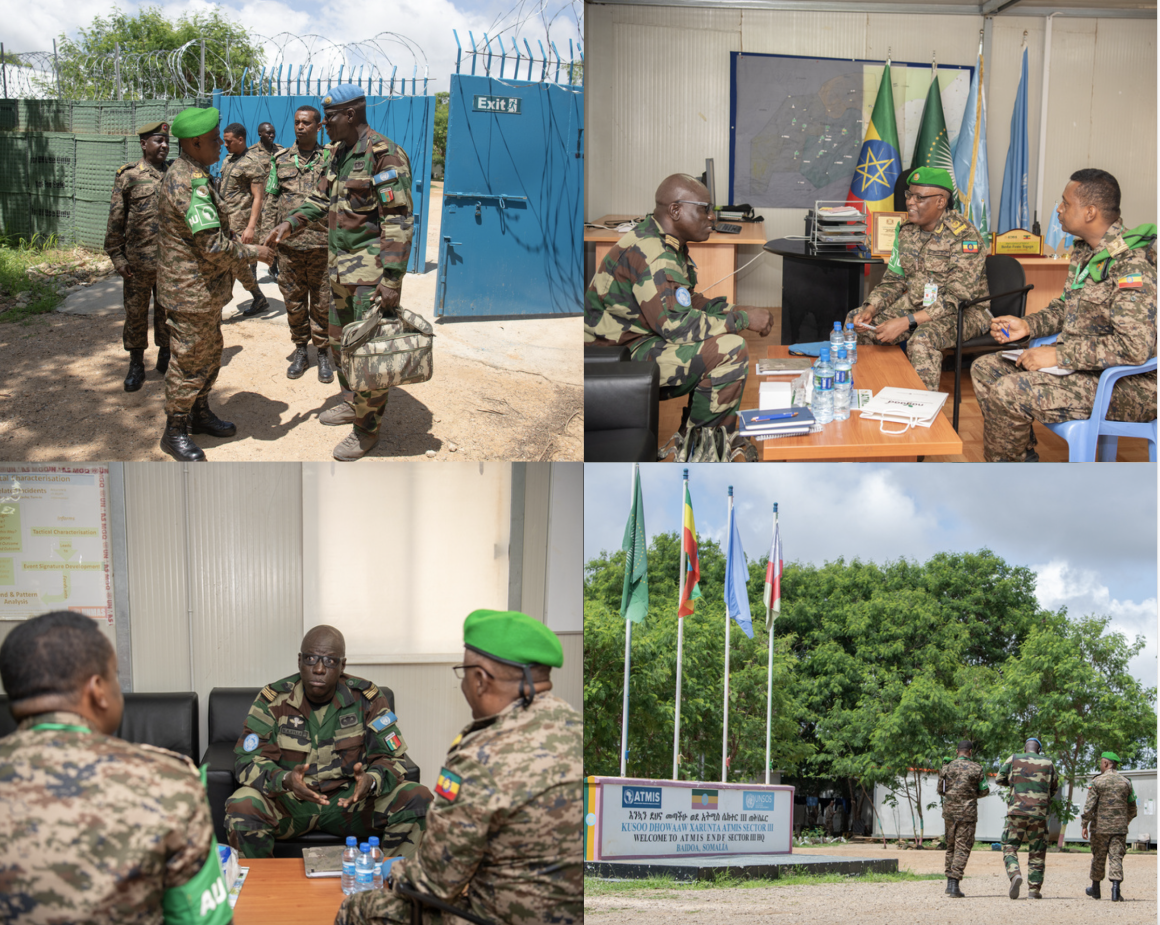
Following his meeting with Mr. Bjarnason, Gen. Sylla heads over to the nearby compound which is home to troops from the Ethiopian National Defense Forces (ENDF).
South West State borders Ethiopia, and the ENDF has a long history of military support for Somalia. It extends as far back as the country’s civil war and includes serving as one of the troop contributing countries to the African Union’s various UN-backed peacekeeping operations in Somalia over the years – the current incarnation is the African Union Support and Stabilization Mission in Somalia (AUSSOM).
For the purposes of AUSSOM’s deployment, the South West State region is designated as Sector 3, with the ENDF being responsible for helping local troops secure the immediate surrounds.
The area surrounding Baidoa is contested by Al-Shabaab and the UN Compound is no stranger to mortar and rocket attacks. In support of South West State’s administration, ENDF troops stationed there play a major role in securing the immediate surrounds.
At the AUSSOM Sector 3 headquarters, Gen. Sylla meets with Brigadier General Besfat Fente Tegegn, the Sector Commander.
Their discussion focuses on recent security developments in the region, coordination with Somali forces, and strengthening joint operations in line with Somalia’s national security priorities. In addition, with Brigadier General Tegegn due to rotate soon back to Addis Ababa soon, Gen. Sylla has an introductory meeting with his replacement.
“People may get thrown by the heavy military aspect of what I do – uniforms, salutes, weapons and all that – but, at its core, this kind of work is also centred on human relationships. Like that cliche of ‘Team-work makes the dream work!” Gen. Sylla says after the meeting.
10:30 a.m. – Compound defences
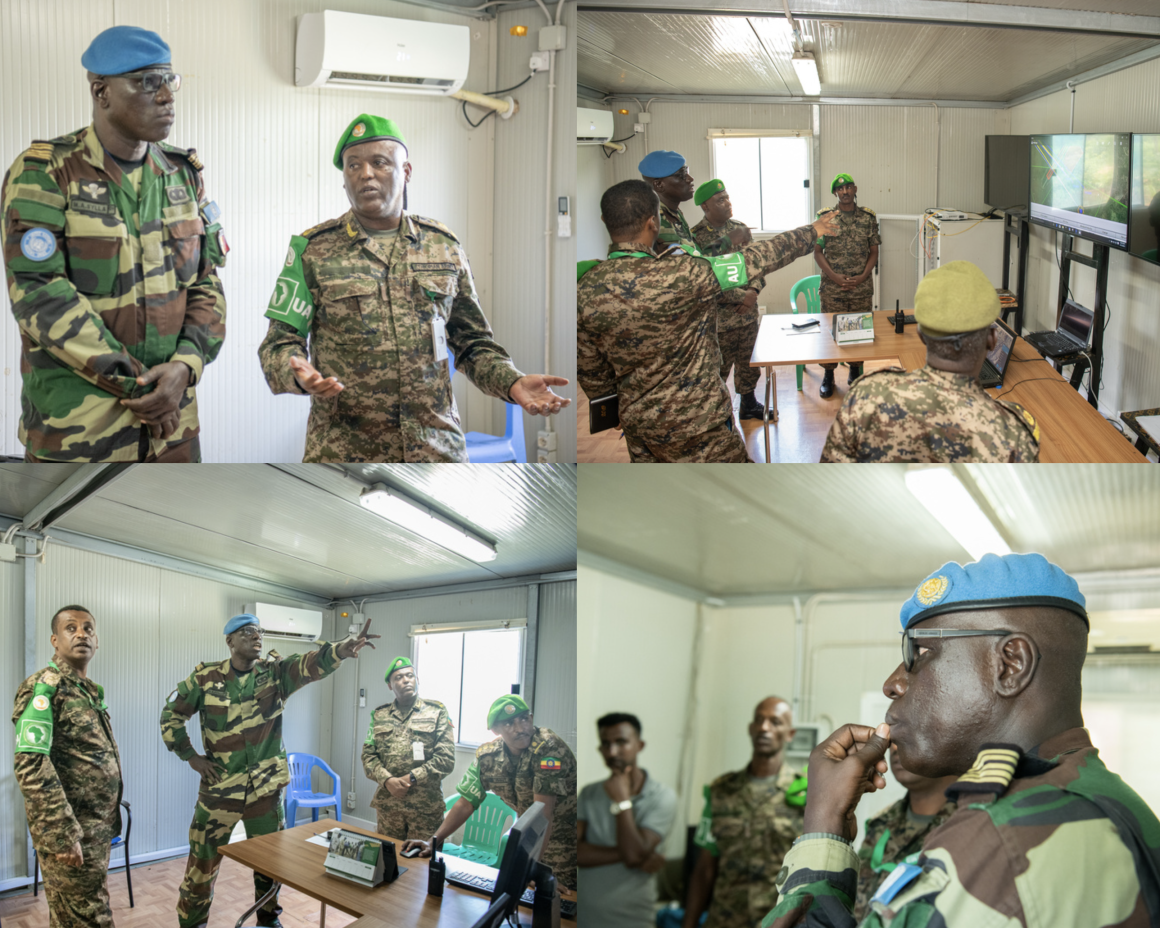
Following his meeting with the AUSSOM Sector 3 leadership, Gen. Sylla pops over for an update on the UN Compound’s Counter-Rocket, Artillery and Mortar (CRAM) system.
Operated by the ENDF contingent, the system is an essential component for keeping UN and staff located in the protected area safe.
The system, developed through close UN-AUSSOM collaboration, is a key part of the security infrastructure in Baidoa.
For Gen. Sylla, the visit is a chance to assess operational readiness and reinforce the importance of coordination in protecting personnel and assets.
11:00 a.m. – Security walkthrough
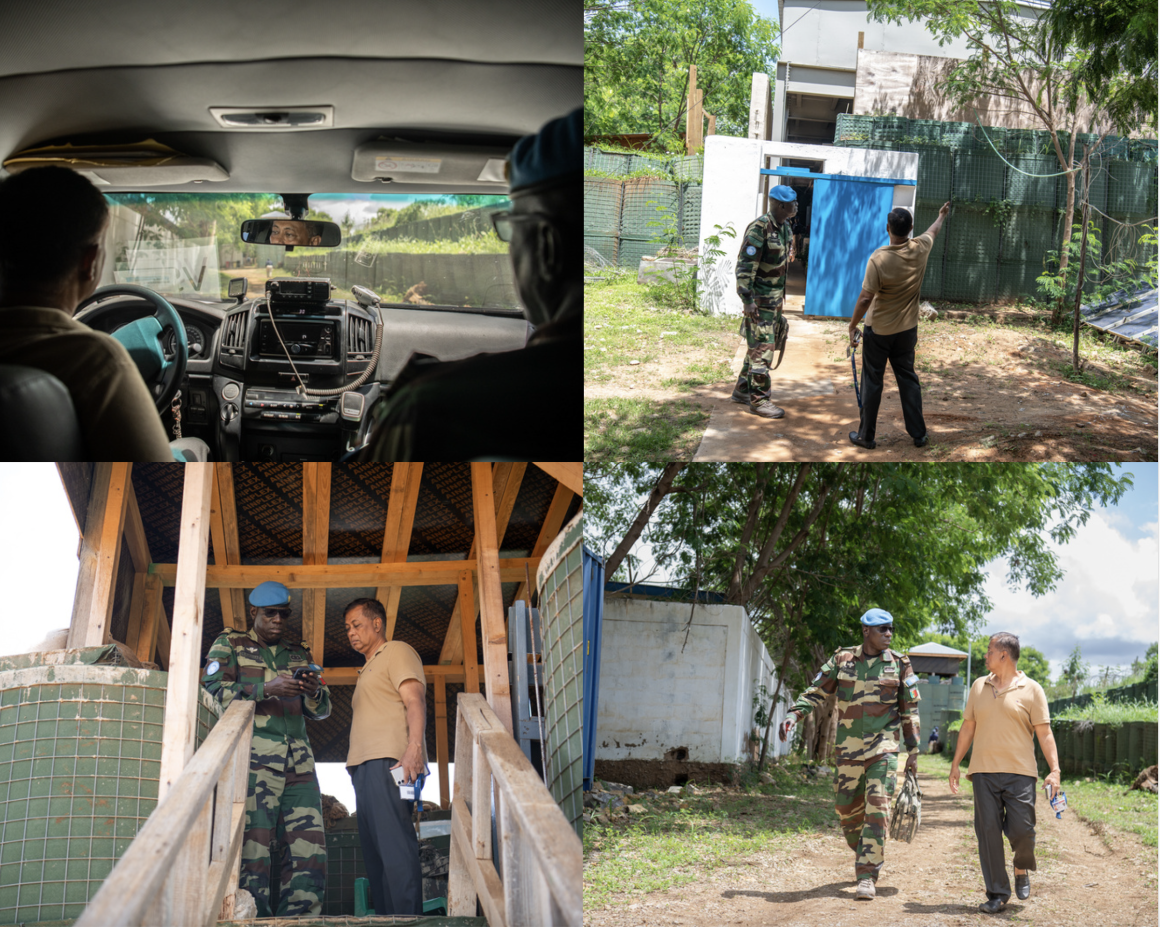
Continuing on the issue of security for UN staff, Gen. Sylla then joins a senior UN security officer, Alan Mahbubul, for a comprehensive walkthrough of the compound.
Beyond technical checks, the discussion highlights a deeper objective: ensuring the safety of UN personnel so they can continue their critical work supporting the Somali people through peacebuilding, humanitarian, and development efforts.
Mr. Mahbubul, a Bangladeshi national with 21 years of experience in the UN as well as the Bangladesh Army, is a staff member of the UN Department of Safety and Security (UNDSS). Somalia is one of the 131 countries in which UNDSS operates with the aim of enabling the safe and effective delivery of UN programmes and activities in the most complex and challenging environments.
12:40 p.m. – Fast farewells
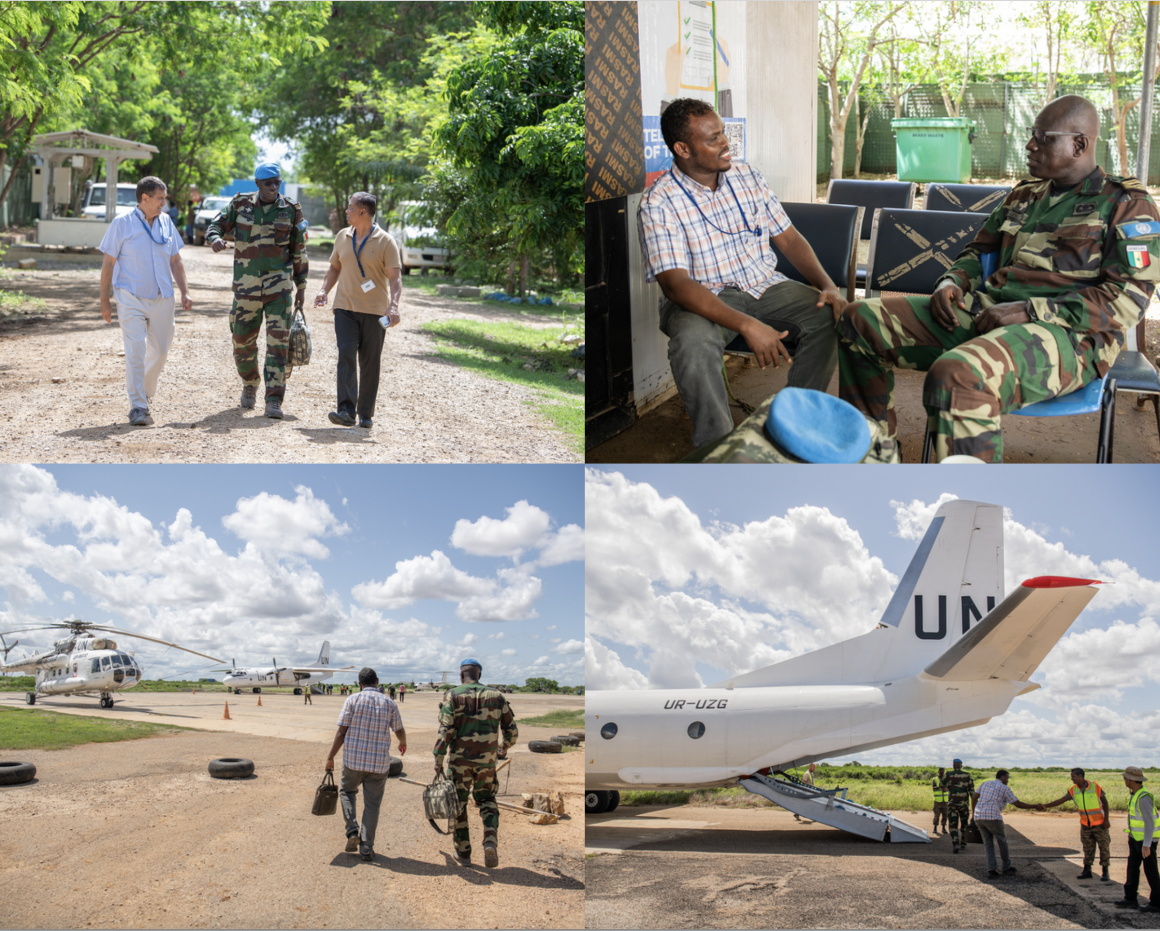
The return flight to Mogadishu is due to take off in early afternoon – leaving Gen. Sylla little time to catch up with other colleagues.
With ten minutes to spare, he makes the most of brief conversations with colleagues, including UNTMIS’ Public Information Officer in South West State, Mohamednor Abdikadir Abdisalam.
“The United Nations can be an eye-opening experience as it brings people together from all over the world to do good things – and here I am discussing local developments in my home state with a senior officer from the other side of the continent,” Mr. Abdisalam says afterwards.
Mr. Bjarnason and Mr. Mahbubul see Gen. Sylla off to the airport terminal, from where he quickly checks in and makes his way to the waiting plane.
01:00 p.m. – Take-off and return
The Antonov’s engines take some time to warm up and start, and the flight finally takes off.
The lush scenery below starts to change to a coastal, desert environment as the flight comes closer to Mogadishu, with its stunning coasts coming in to view.
Onboard, Gen. Sylla takes a moment to enjoy the scenery and reflect on his day’s engagements and upcoming tasks.
“One of the perks of this kind of work: great views!” Gen. Sylla yells above the engine noise, before landing.
03:00 p.m. – Back in the office
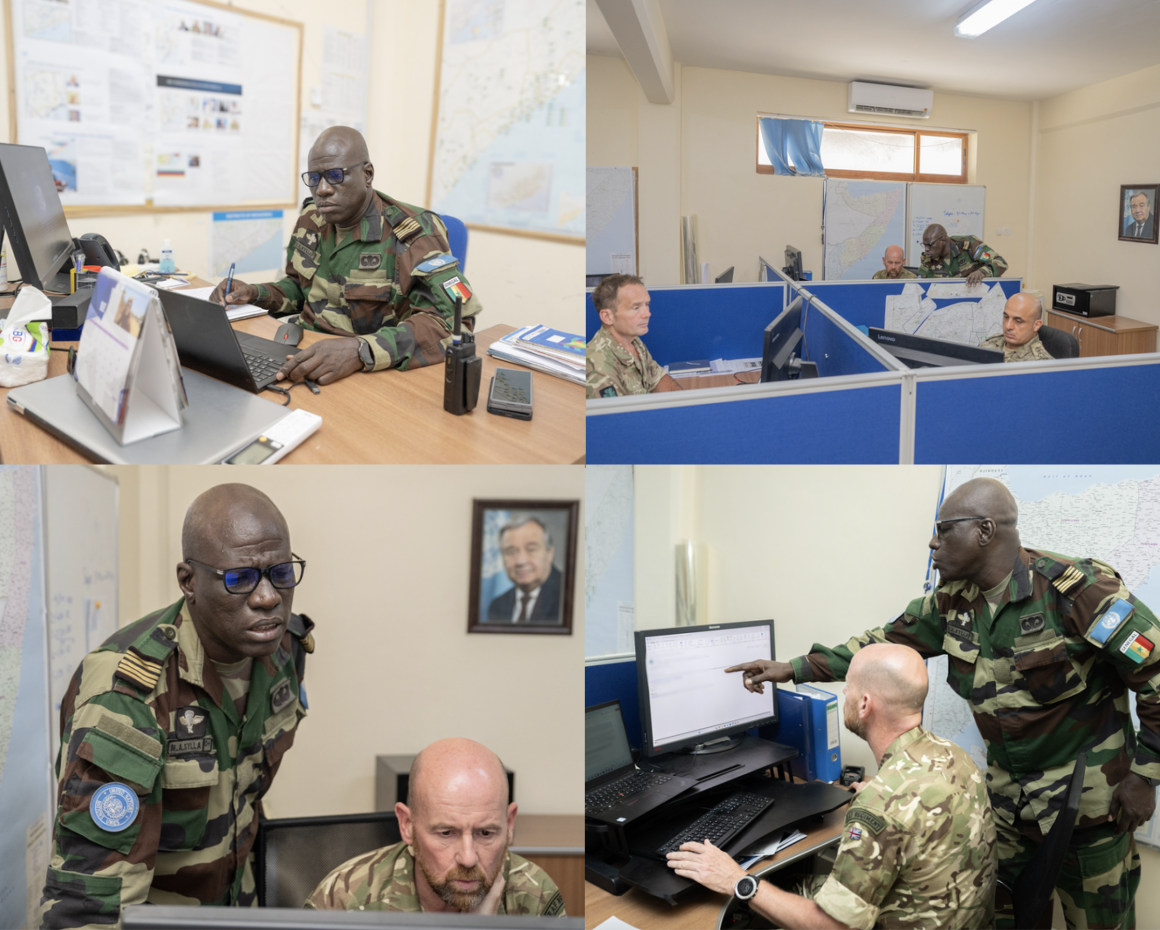
From the airport, Gen. Sylla heads back to the nearby UN Compound in Mogadishu where he goes to his office to make sense of all that he has heard and learned on his trip. After pulling his notes together, he discusses the visit with members of his team to inform the strategic planning and recommendations advice that underpins the Mission’s defence reform priorities.
“It’s always better to get everything down while it’s still fresh in one’s mind, of course, but also, life can be unpredictable here with unexpected workload, so I prefer not to delay – especially as I have a meeting scheduled for tomorrow and some of the aspects of this visit should be covered,” Gen. Sylla says.
And with that, he turns around and starts working on a report.


