


Baidoa – Being a journalist in Somalia is not easy.
According to Reporters Without Borders, Somali media workers operate in an environment of great insecurity, noting that “with more than 50 media professionals killed since 2010, Somalia remains one of the most dangerous countries for journalists in Africa.”
The non-governmental organisation goes on to note that the dangers faced by Somali journalists include “arrests, harassment, torture, sexual assaults against female journalists and murder,” and “those who do not censor themselves are more likely to be targeted by Al-Shabaab, the main perpetrator behind journalist killings, or arbitrarily detained. Journalists who investigate sensitive topics like corruption are particularly at risk.”
These are views that Omar Mustafa Nor, a former journalist and now a government communicator, can relate to all too well.
However, he also notes the advances that have been made and stresses that no matter how challenging the profession may be now, it was much worse before.
“Non-existent operating budgets, diminishing audiences and constant threats, and even grenade attacks on the newsroom – not an ideal combination!” says Mr. Nor.
“Back then,” he adds, “becoming a journalist was like signing your own death warrant.”

Initially motivated by a love of storytelling, the 39-year-old Mr. Nor braved the violence of the civil war in the early 2000s in Somalia’s South West State to serve as a journalist, with his journey culminating, so far, with his appointment to a senior role in the Federal Member State’s administration.
Beginnings
Born in 1986 in Baidoa, the largest city in Somalia’s South West State, Mr. Nor. attended Khadija Primary and Secondary School, completing his education in 2006, amidst the violence of the ongoing civil war.
His family background was in farming but, from a young age, he had a fascination for storytelling. The impact of the war added a new dimension to that goal.
“I wanted to serve my people. Using my voice and storytelling skills was the only way I knew how to help them,” Mr. Nor says. “I’ve always loved storytelling – but, more than that, I wanted to speak for those who couldn’t.”
After finishing secondary school, he landed a voluntary position at Radio Warsan, a private media outlet based in Baidoa and got his first exposure to journalism.
Wanting to complement what he learnt on the job, in 2008 he moved to the capital where he enrolled at Mogadishu University to study political science and information, graduating in 2011 with a bachelor’s degree in journalism. He spent the next two years in Mogadishu before returning to Baidoa in 2013, where he took up a paid position with Radio Warsan.
Eventually, the academic qualification, along with his work experience, helped him secure the position of editor-in-chief at Radio Warsan, which was seen locally as a government-aligned news outlet.
“I used to also receive threats from terror groups when I was working with Radio Warsan as Editor-in-Chief, despite it being an independent media outlet. But it was not as much as when I started government-affiliated media outlets,” Mr. Nor says.
His efforts at Radio Warsan were noticed by government officials. In 2016, he joined the South West State’s Ministry of Information and Social Awareness, which tasked him with setting up the state-owned radio and television station.

This was no easy feat. Mr. Nor had to start slowly as resources and skills were limited. This would be the young Federal Member State’s first such outlet, as South West State was formed in 2015 in the wake of post-civil war agreements on the country's federal structure.
The career boost was welcome, although it also meant greater threat to Mr. Nor’s life from the Al-Shabaab terrorist group, given his now direct association with the Federal Member State’s administration.
“After launching the station, the threats doubled. Our offices were attacked with grenades,” Mr. Nor recalls.
Despite the risks, he never considered quitting.
“At the time, I refused to let fear of terror groups shake my commitment to serving my government and people, and that is still the case today,” Mr. Nor says.
Adding to the general strife of the time and the constant threat of violence were more mundane but still problematic challenges due to low staffing, limited financial resources and shellshockedand fearful audiences.
“The hardest part wasn’t just producing the content. It was getting people to listen to it,” Mr. Nor explains. “Even officials were afraid to speak on air, and ordinary citizens worried that tuning in to our radio station would make them targets.”
Throughout it all, Mr. Nor held firm to his conviction in the power of the media.
“No matter what it is happening outside, real change to a community or to a country has to come from within society. The media was, and remains, essential in informing the public and helping to rebuild society, “he notes.
Higher steps
Since then, Mr. Nor’s career has progressed – in 2023 he was appointed to the position of Director-General of the Ministry of Information and Social Awareness.
“It’s one of those things in life: I’m now in a position to help bring about positive change to the media sector in South West State,” Mr. Nor says.
“Having worked as a journalist here,” he continues, “means I have a very clear understanding of the achievements and challenges of the local media, and how they are related to adverse security, political and economic conditions of the country.”
In 2017, he completed the establishment of South West State Television – or SWS-TV – as part of a wider ministry effort to provide another platform for sharing government information and more with local audiences.
“Once-silent voices have returned to the airwaves. Government messages are no longer met with suspicion but with genuine interest,” says Mr. Nor, adding how public figures who once feared showing their faces now speak openly on SWS-TV, and programmes that previously had trouble attracting guests now did so easily.
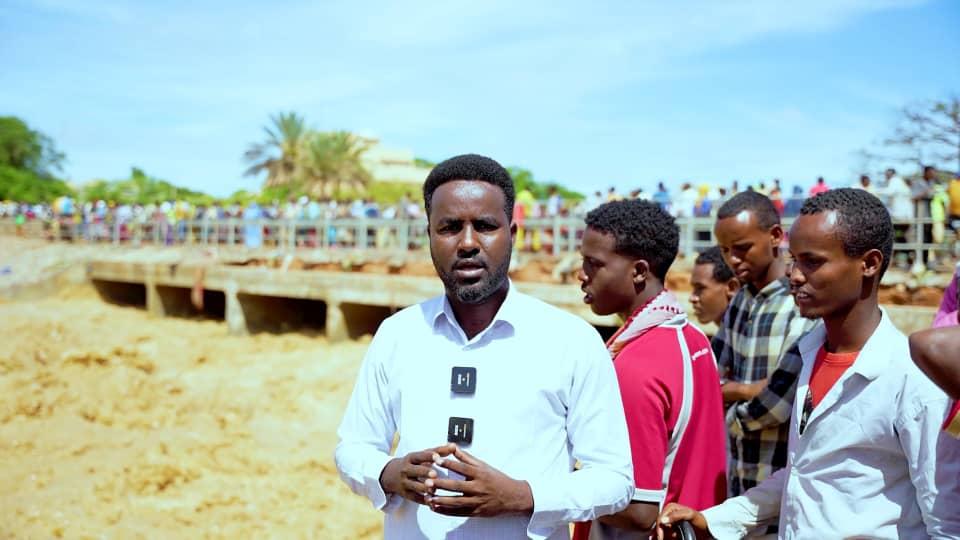
“One of my goals was to counter terrorist narratives, and fortunately, it has worked,” Mr. Nor adds. “Government communications are reaching the public effectively, combating terrorist propaganda and sowing the seeds of change.”
As the Ministry of Information and Social Awareness’s top official, Mr. Nor oversees the development of government communication strategies and leads efforts to revitalise the media sector, bridging the gap between the Federal Member State’s administration and its citizens.
“Before journalists used to fear working with government-affiliated media. For example, we started with just four journalists, andnow, we operate six radio stations across South West State and a television station, with more than 90 staff members overall,” he says.
SWS-TV now has 96 staff spread out across the Federal Member State’s three regions – Bay, Bakool and Lower Shabelle – and produces daily broadcasts covering local and national news with a focus on government-related matters affecting residents.
High hopes, more training
According to the largest media grouping in the Federal Member State, the South West Journalists Association (SOWEJA), there are 15 news media outlets operating there, in both the private and public spheres, and with around 300 employed.
Mr. Nor has high hopes for the media sector – most of it centred on developing it into a professional, credible and ethical sector of society. He stresses the key role of improving education and skills amongst the media and raising awareness amongst the public.
“The younger generation must not look up to so-called ‘journalists’ who merely own a camera and can talk. Journalism is not a platform for loudmouths spreading falsehoods and hate speech just to gain online attention,” he stresses.
“We all know that no one can become a doctor, teacher, or engineer without the proper qualifications. Journalism is no different. This profession is for those who respect media laws and ethics,” he says. “Study the craft, and only then pick up a camera or microphone. With the right skills, you can contribute meaningfully to nation-building,” he emphasises.
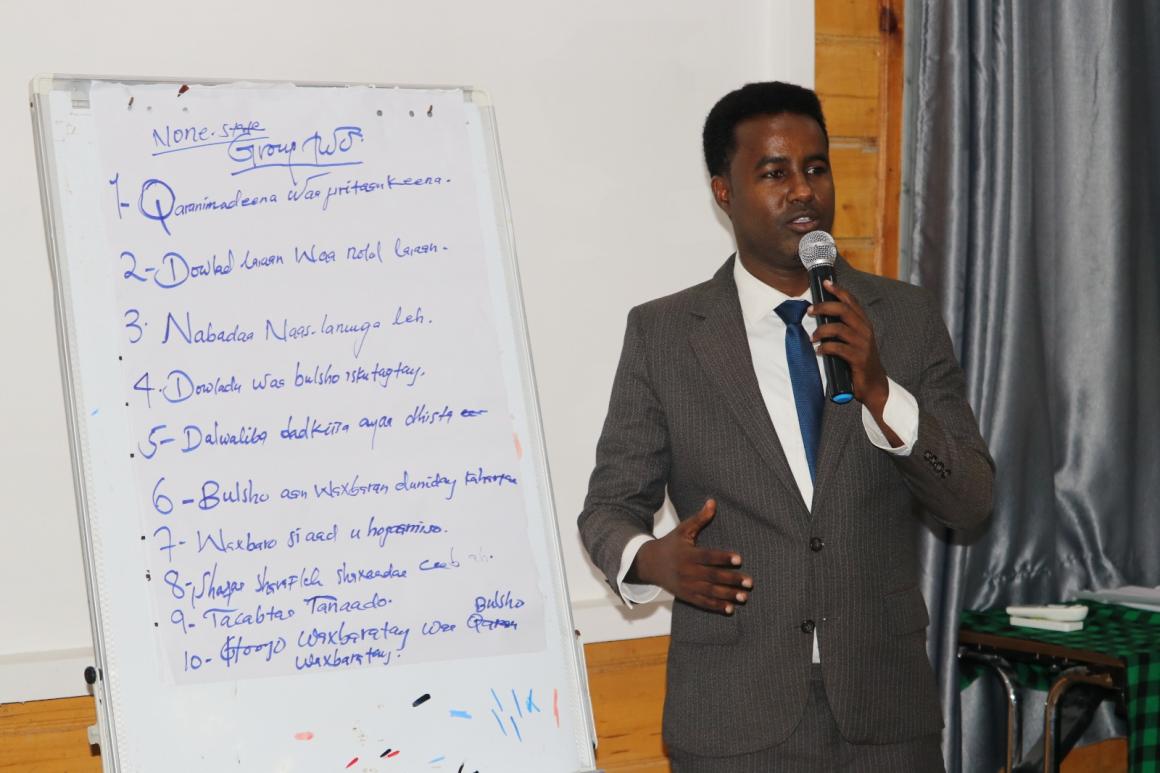
In the longer-term, Mr. Nor has goals that branch out from South West State: establish a learning venue dedicated to media development in Somalia.
“In the future, I want to ensure that Somali journalism is based on knowledge and principles – we need to combat fake news that incites clan conflict and political crisis. To achieve this, I plan to establish educational institutions dedicated to journalism and training programmes that will supplement their career development,” Mr. Nor says.
UN support
The United Nations advocates for the significant role that the press, journalism, access and dissemination of information play in ensuring a sustainable future.
According to the UN Educational, Scientific and Cultural Organization (UNESCO), media freedom and access to information feed into the wider development objective of empowering people, and empowerment is a multi-dimensional social and political process that helps people gain control over their own lives.
UNESCO goes on to state that this can only be achieved through access to accurate, fair and unbiased information, representing a plurality of opinions, and the means to actively communicate vertically and horizontally, thereby participating in the active life of the community.
In Somalia, the United Nations supports media development through its work with various media associations around the country.
In the case of the United Nations Transitional Assistance Mission in Somalia (UNTMIS), that support includes working with both the South West State administration and local media associations to develop the Federal Member State’s media sector – the latter includes working with SOWEJA, the Somali Media Women Association (SOMWA) and the Ministry of Information and Social Awareness, among others, to hold trainings for local media professionals.

“The UN’s vision is of a world in which everyone can live in peace, dignity, and equality on a healthy planet – and the media have a major role to play, but perhaps even more so in countries rebuilding from decades of war and civil strife like Somalia,” says the Chief of UNTMIS’ Strategic Communications and Public Affairs Group, Ari Gaitanis.
“So, efforts to ensure a professional media and communication sector,” he continues, “in which clear and reliable information is disseminated professionally, freely and widely, and with a plurality of voices, are welcome and necessary.”


